The early spring that showed up last month went on hiatus as the Arctic Express roared through with six inches of snow and bitter cold--it dropped to -3F on the worst night. It's almost as if the climate had to reboot to get back on track. But that is all behind us now and each [...]
The Secret Garden is a path through the woods along the side creek on our property. (See map at the end of this article.) The creek comes under the road through a culvert and then drops several feet to the creek bed below. I refer to this as the waterfall, which may sound a tad [...]
Trilliums have charmed and fascinated me ever since my days as a Girl Scout, when I learned to identify a few wildflowers. With three leaves and three petals, trillium practically named itself (tri = 3) and was easy to remember. I never set out to have a trillium collection, but I've never turned down an [...]
It is getting to be peak wildflower season in my part of the country, a couple of weeks ahead of the usual time. I took a walk in my new neighborhood, and this is what I saw.This is growing on our property, along the path I am making by the big brook.This is growing on [...]
This spring has alternated between unseasonably warm and fairly seasonable. The warmth brought the forsythias and daffodils into early bloom, and the returning cool weather kept them looking good for far longer than we had a right to expect. The old garden has cultivated flowers blooming; the new garden has some native plants blooming. I [...]
It always seems like there is nothing blooming in mid-May, but when I really look around, I realize there is a lot blooming but none of it is flashy, like the big yellow sheets of daffodils previous or the three Grandes Dames of June that will soon be here. The blooms of mid-May are modest [...]
Black Plants: 75 Striking Choices for the Garden by Paul Bonine is the kind of book that drives me wild. Seventy-five gorgeous plants and over half of them are not hardy for me. Wait. Maybe it's just that half of the ones I want to grow aren't hardy for me. I actually didn't go through [...]
Spring has finally arrived at Purdville. Unfortunately, I seem to have lost some of my photo gallery features when I switched to this new design. You can click on each thumbnail for a larger image, but then you have to use your browser's Back button to get back to the thumbnails. Also blooming: Creeping phlox [...]
Variegated bulbous oat grass, sweet white violet, and a bit of 'White Nancy' lamium in the lower left cornerBecause of the warm April, a lot of the daffodils that were still blooming last year are done for this year. This is the "gap" time between the early blooming spring flowers and the big June extravaganza [...]
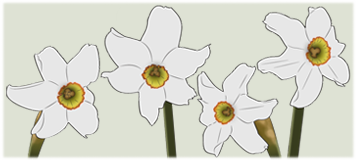
Yes, I know the Garden Bloggers Bloom Day was yesterday the day before yesterday. I didn't get finished in time. So just pretend this is May 15th, okay? (As always, hover your mouse over any thumbnail for a caption, and click on any photo for a larger image.) Narcissus Let's start off with the narcissus. [...]




Recent Comments